Sculptural Glass & Mineral Tables: Curation, Refraction, and Mass
A coffee table must do more than hold a book; in contemporary salons, it serves as an artistic anchor. We explore cast amber and champagne glass, honed monolithic stone, and the optical physics of living room centerpieces.
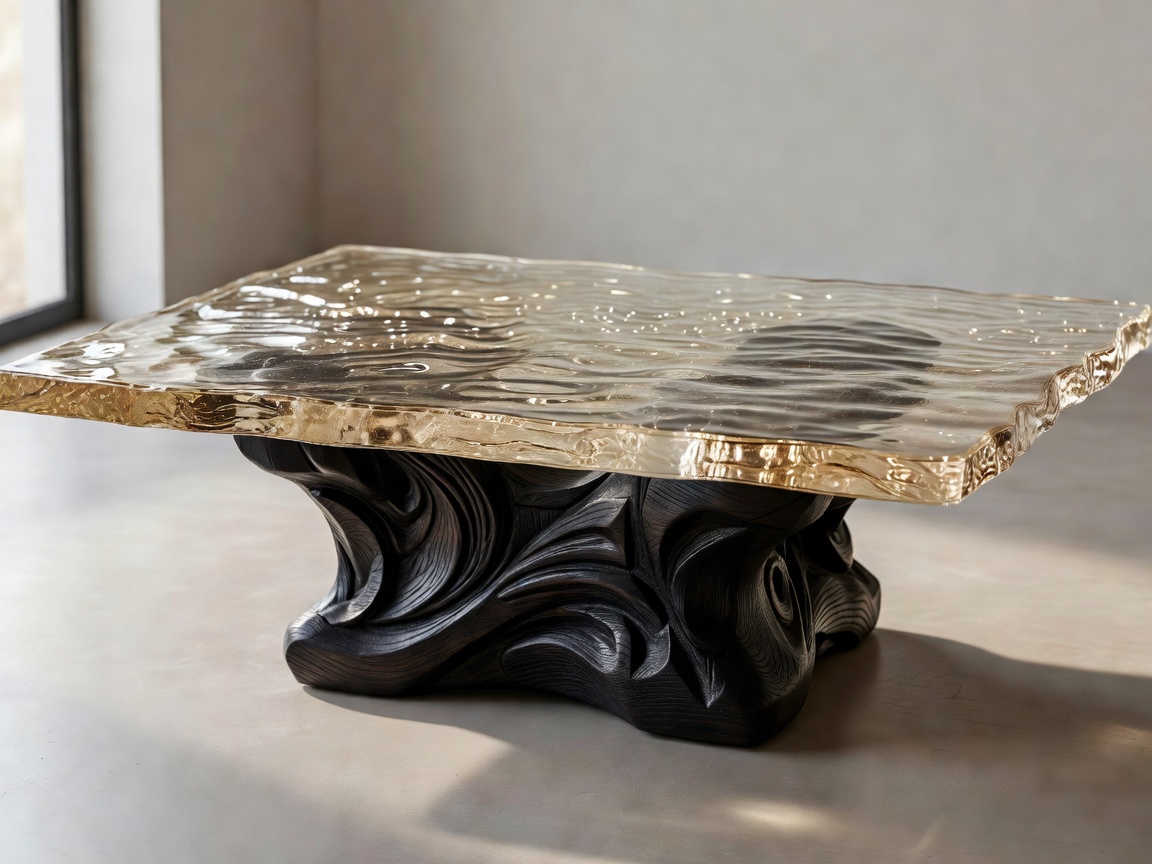
Heavy kiln-fused cast glass features internal organic ripples that filter sunlight into soft, radiant caustics on the floor below.
The Alchemy of Cast Glass in Living Architecture
Standard flat float glass often registers as sterile or corporate in a residential living room. In contrast, kiln-formed, slumped, or poured cast glass introduces an organic, fluid weight. By heating mineral soda-lime or borosilicate batches into ceramic molds at temperatures exceeding 800 degrees Celsius, glassmakers impart textured surfaces, subtle air bubbles, and gentle undulating facets.
When tinted with delicate yellow amber or warm champagne hues, a 30 to 45 millimeter thick glass slab absorbs harsh overhead glare while projecting a luminous golden glow across adjacent upholstery. The transparency prevents visual crowding in central conversation groupings, allowing complex pattern weaves on statement rugs beneath to remain perceptible.
Pairing Glass Tops with Mineral Plinths
The aesthetic success of glass centerpieces relies on structural tension: the juxtaposition of sheer, luminous transparency against ancient geological weight.
| Base Material | Weight Profile | Color Pairing | Atmospheric Role |
|---|---|---|---|
| Roman Travertine | Heavy porous mineral (honed) | Pure white bouclé & amber glass | Earthy matte counterweight to glassy high-frequency reflections. |
| Nero Marquina Marble | Dense crystalline stone | Yellow accents & black architectural lines | Introduces dramatic, deep black veining beneath clear or tinted glass. |
| Charred Fumed Oak | Solid cellular timber | Satin yellow bronze & crisp linen | Absorbs ambient light, directing gaze upward to the glass plane. |
Refraction, Caustics, and Natural Sunlight
Sunlight traversing a sculpted glass coffee table produces dynamic optical caustics—patterns of light created by the curved boundary of the glass concentrating sunlight onto the floor plane. In luxury spaces where changing daylight is cherished, setting the table within the direct sweep of south- or west-facing windows turns the living area into a dynamic canvas. As the sun moves, caustic patterns slowly drift across the floor, animating the interior without artificial devices.
Selection Dilemmas: Single Monolith vs. Nested Clusters
Single Monumental Slab
- Imparts an uncompromising, museum-grade architectural stillness.
- Provides expansive, unsegmented display surfaces for curated volumes.
- Serves as an authoritative geometrical hub for symmetrical sofa arrangements.
Nested Asymmetric Groupings
- Permits effortless relocation during large hosting occasions.
- Enables varied heights (e.g., 32 cm, 38 cm, and 45 cm) that create dynamic visual layering.
- Allows mixing materials: pairing a round cast glass disc with a sculpted black granite plinth.
Maintenance and Surface Preservation
While toughened architectural cast glass is structurally resilient against thermal shock and downward weight, microscopic abrasion from ceramic vessels or mineral decor must be mitigated. We specify subtle micro-chamfered rim treatments and recommend using discreet, chamois-backed bronze coasters. Regular cleaning should utilize deionized water and non-ammoniated surfactants with waffle-weave microfiber to prevent streak formation on low-iron tinted surfaces.